Interdisciplinary Research & Collaboration Panel
- Early Career Faculty
- Faculty
Are you considering a multi-PI funding opportunity? Have you recently started a new research collaboration? Are you interested in building an interdisciplinary team?
Join us for an engaging session on interdisciplinary research and collaboration, designed to spark new ideas and explore opportunities for collaborative research.
This session will include a presentation that covers how to find multi-PI funding opportunities and build teams around NIH’s Highlighted Topics. A panel discussion will follow, featuring panelists who will share their unique perspectives and insights on interdisciplinary collaboration. Topics will include logical considerations of forming interdisciplinary collaborations, discussing credit and authorship, navigating trust, risk, and differing viewpoints, and more! You won’t want to miss it!
Meet the Presenters:
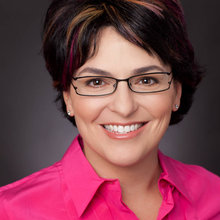 Dr. Mirella Bucci received a PhD in Molecular and Cellular Biology from Washington University, where she studied the dynamics of nuclear pore complexes. Her postdoctoral work at Stanford investigated protein misfolding in the context of neurodegenerative disease. She worked for nearly two decades as an editor at the journals Nature and Nature Chemical Biology, vetting the submissions and working with authors to shape their research papers and review articles for publication. She has also worked in marketing communications, as a writer at a biotechnology start-up company, and as an independent consultant helping scientists and clinicians prepare their manuscripts and grant proposals. Mirella brings extensive expertise in scientific and medical communication as well as managing submission and publication workflows to the Proposal Development Office.
 Dr. Kiran Kocherlakota is the Director of the Proposal Development Office (PDO) within the School of Medicine. She is dedicated to furthering the PDO mission and to support PIs as they seek programmatic funding opportunities, striving to help them think and plan stategically. Prior to this role, she served as the manager of diverse research centers and institutes, providing invaluable oversight in budgetary, operational, and administrative matters. She holds a PhD in Cell and Developmental Biology and has worked in a wide variety of research fields over the years. She has authored and edited manuscripts, book chapters, and grant proposals, translating complex ideas into compelling and effective narratives.
Meet the Panelists:
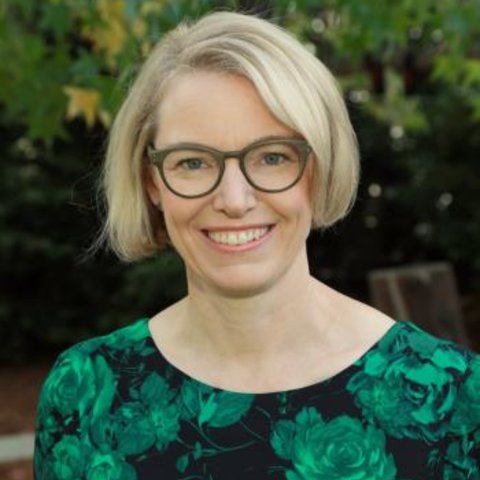 Dr. Alison Marsden is the Douglass M. and Nola Leishman Professor of cardiovascular disease in the departments of Pediatrics, Bioengineering, and, by courtesy, Mechanical Engineering at Stanford University. From 2007-2015 she was a faculty member in the Mechanical and Aerospace Engineering Department at the University of California San Diego. She graduated with a bachelor’s degree in Mechanical Engineering from Princeton University in 1998, and a PhD in Mechanical Engineering from Stanford in 2005 working with Prof. Parviz Moin. She was a postdoctoral fellow at Stanford University in Bioengineering and Pediatric Cardiology from 2005-07 working with Charles Taylor and Jeffrey Feinstein. She was the recipient of a Burroughs Wellcome Fund Career Award at the Scientific Interface in 2007, an NSF CAREER award in 2011. She is a fellow of the American Institute of Medical and Biological Engineers, the Society for Industrial and Applied Mathematics, the American Physical Society, the Biomedical Engineering Society, and the American Society of Mechanical Engineers. She received the UCSD graduate student association faculty mentor award in 2014 and MAE department teaching award at UCSD in 2015 and the Van C. Mow Medal from the ASME in 2023, and the department of Pediatrics Postdoc Mentoring Award in 2025. She has published over 200 peer reviewed journal papers, and has active funding from the NSF, NIH, and several private foundations. She serves on editorial boards of leading journals in biomechanics and computational science. Her work focuses on the development of numerical methods for cardiovascular blood flow simulation, medical device design, application of optimization to large-scale fluid mechanics simulations, and application of engineering tools to impact patient care in cardiovascular surgery and congenital heart disease.
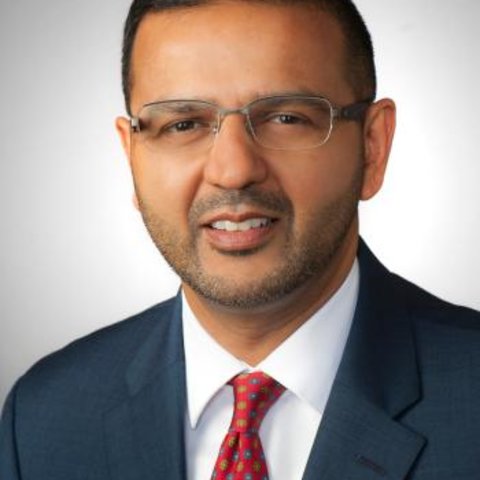 Dr. Sohail Husain, MD, is the Chambers-Okamura Endowed Professor and Chief of the Division of Pediatric Gastroenterology, Hepatology, and Nutrition at Stanford. He assumed the position as Chief in 2019, with the vision for Stanford to serve as the pre-eminent provider of pediatric GI care in the region and to emerge as a global leader in pediatric GI research and education and a destination site for highly recognized programs of excellence. The mission that he promotes for the Division is to “heal children with digestive disease through innovation.” Sohail likes to be a matchmaker. At Stanford, he intends to marry science and medicine. Early on in his career, he became entrenched in a quest to decipher the mechanisms underlying disorders of the exocrine pancreas. Sohail’s research investigates three broad areas relating to the exocrine pancreas: (1) The crucial molecular and immune signaling pathways that initiate and transduce pancreatitis; (2) the factors that turn on pancreatic regeneration and recovery after pancreatic injury; and (3) the mechanisms underlying drug-induced pancreatitis. The overarching goal is to move the needle on science and medicine and to elevate work in the exocrine field to the highest levels of impact, by leveraging multi-omics, big data, and the rich, cutting edge environment across Stanford. The mission of Sohail’s research group is to “make breakthroughs in the pancreas and beyond that benefit patients and society, through innovation, partnerships, inclusion, and integrity.”
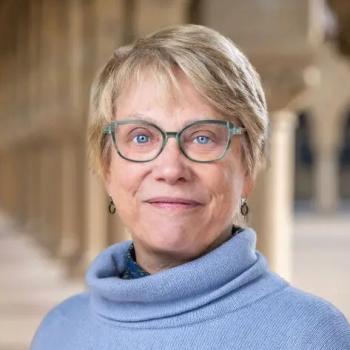 Dr. Martha Cyert directs a research lab that studies Ca2+-dependent signal transduction, focusing on calcineurin, the highly conserved Ca2+/calmodulin-regulated protein phosphatase that plays critical roles in muscle, immune and neural cells. Dr. Cyert pioneered studies of yeast calcineurin, where her work elucidated conserved aspects of substrate recognition and mechanisms by which the signaling network evolves. Her studies on human calcineurin uncovered the mechanism by which immunosuppressant drugs, FK506 and cyclosporine A, inhibit this enzyme. More recently, her lab established the human calcineurin signaling network, using both experimental and computational approaches, which uncovered many new functions and substrates for calcineurin, including roles for calcineurin in nuclear transport, centriole/cilia and phosphoinositide signaling. Professor Cyert is also an active educator. She received the Stanford Biosciences Excellence in Mentoring award, developed an innovative, inquiry-based, introductory laboratory course for undergraduates that examines p53, and initiated a summer transition program for incoming freshman from under resourced schools. She directed an NIH-funded graduate training program in Cell and Molecular Biology (2009-2019), and was an instructor for Cell Biology workshops in Ghana that were sponsored by the ASCB. Her administrative roles include serving as Senior Associate Vice Provost for Undergraduate Education from 2010-13, and Associate Chair (2014-2020), and Chair (2021-present) of the Department of Biology. Dr. Cyert is a member of the Stanford Diabetes Research Center and Bio-X Institutes and serves on the council of the American Society for Biochemistry and Molecular Biology (ASBMB) where she was named as an ASBMB fellow in 2024. She has been awarded fellowships from the American Cancer Society, the Life Sciences Research Foundation and the Lucille P. Markey Charitable Trust, and was named by Stanford University as a Terman Fellow, a Gabilan Fellow, and as the Thomas W. and Susan B. Ford University Fellow in Undergraduate Education.
About Our Virtual Series:
The Grant Writing Academy Seminar Series focuses on socioemotional and practical approaches to improving the grant writing experience and increasing funding success. This series provides tools and strategies to lead early-career faculty to grant success and onto independent research careers through panel sessions, workshops, and focused talks.
Accommodations:
If you need a disability related accommodation to participate in this event (captioning, sign language interpreting, Braille, etc.), please contact the Diversity & Access Office at disability.access@stanford.edu or 650.725.0326. Requests should be received at least one week prior to the event.