MSCA Fellowship Workshop
- Postdocs
- Trainees
The 2026 call for the prestigious Marie Skłodowska-Curie Actions (MSCA) Postdoctoral Fellowship is now open.
Are you a postdoc or advanced PhD student with ties to Europe or an EU‑associated country–or considering building part of your research career there?
This workshop is designed for postdocs and advanced PhD students who are considering applying for a MSCA Postdoctoral Fellowship, either as a European Fellowship in Europe or as a Global Fellowship combining research in the US with a return phase in Europe or an associated country.
- Turn your idea into a clear, fundable research question
- Use the MSCA proposal template effectively (Part A and Part B)
-
Address the three core evaluation criteria: Excellence, Impact, and Implementation
- Present your CV, host environment, interdisciplinarity and knowledge transfer in line with reviewer expectations
- Understand how proposals are scored and what distinguishes successful applications
About the Instructor:
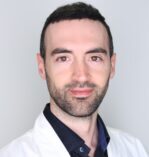
Dr. Antonio Tomasso is postdoctoral scholar at Stanford Medicine – Department of Surgery. He is a recipient of the NWO/Dutch Research Council Rubicon grant and the Horizon Europe Marie Skłodowska-Curie Actions (MSCA) Global Fellowship, investigating the cellular and molecular drivers of tissue regeneration and fibrosis. His ultimate goal is to identify therapeutic targets enhancing organ and tissue repair after injury or disease. He earned his BSc and a MSc in Medical and Molecular Biotechnology from Vita-Salute San Raffaele University in Milan, and a PhD in Cellular and Molecular Life Sciences at the Max Planck Institute for Molecular Biomedicine in Germany. Having conducted research across five countries, including at the Karolinska Institute, University of Kentucky and Hubrecht Institute, he brings a deep foundation in regenerative medicine, molecular biology and translational research. He has gained extensive experience writing and securing competitive grants and has developed a practical toolbox of strategies for navigating the challenges of grant applications. As a Grant Coach, he is committed to sharing what he has learned, best practices and common pitfalls to help students and postdocs strengthen their applications, particularly for international grants, and achieve their professional goals. Beyond the lab, he enjoys hiking, ballroom and bachata, working out and exploring Bay area cafes in search of the best espresso.
If you need a disability related accommodation to participate in this event (captioning, sign language interpreting, Braille, etc.), please contact the Diversity & Access Office at disability.access@stanford.edu or 650.725.0326. Requests should be received at least one week prior to the event.