NRSA Proposal Bootcamp (BIOS 242)
- Graduate Students
- Medical Students
Registration is closed. This Bootcamp will be offered next in Spring 2027. Add your name to our interested list and we will email you when registration is available again.
This NRSA Proposal Bootcamp is specifically tailored for medical / graduate students and postdocs applying to NIH NRSA fellowships (e.g., NIH F30, F31, F32). Bootcamp participants develop proposals through guided exercises with an emphasis on establishing a writing practice and in-class peer review.
Why Join our Proposal Bootcamp?
Increase your potential for success! Prior cohorts (started in 2014) had nearly double the proposal successes as non-participants!
Learn new approaches for eliciting and delivering effective feedback!
100% of prior Bootcamp participants reported feedback received during course improved their writing.
Join the Bootcamp community! This community will guide and support your efforts in writing a strong proposal.
Check out our published outcomes in PLOS ONE.
This 9-week bootcamp includes:
- Weekly in person meetings led by Grant Coaches on Thursdays, September 24 – November 19, 2026 at 3:00pm-4:50pm
- Weekly peer review for impactful feedback
- Priority for graduate students working on NIH F31 proposals
- Videos and resources to guide the development of your proposal
- Overview of grant writing fundamentals
- Tips & resources for writing compelling proposals
Who this is for:
- Biosciences & School of Medicine Graduate Students (1st priority)
- Medical Students (2nd priority) writing NIH NRSA Fellowships (F30, F31)
- Postdocs or clinical fellows / scholars (3rd priority) writing NIH NRSA Fellowships (F32)
- All participants must committed to attending weekly in person meetings on Thursdays, September 24 – November 19, 2026 at 3:00pm-4:50pm
This Bootcamp is only available to Stanford affiliates at this time.
Graduate & Medical Students:
Please register using the link above and then we will email you a permission code to register for BIOS 242 in Axess. The course is credit / no credit. A satisfactory grade for BIOS 242 registered students requires attending and participating in at least 7 weekly meetings.
Our bootcamp goal:
The goal of the course is to conceive, write, and revise a proposal, with the ultimate goal of submitting it. Towards that end, ancillary goals are:
- Understand the role each document has in a proposal.
- Draft and revise each document, with a focus on Specific Aims, Research Plan, and Training Plan documents.
- Learn to give and receive critical feedback on scientific writing.
- Understand how reviewers and the review process evaluate your application.
- Enhance writing clarity and simplicity to improve scientific writing, and establish a writing practice.

This bootcamp is for you, if you can:
- Attend at least 7 in person weekly meetings (Thursdays, September 24 – November 19, 2026 at 3:00pm-4:50pm)
- Commit to a writing schedule during the entire course.
- Set aside 1-2 hours per week to review materials on course website (Canvas) which are organized as 10 modules.
- Build 2-3 writing blocks into your weekly schedule of at least 2-hours each to draft your proposal documents.
Bootcamp Structure:
Each week will begin with a mini-lecture addressing the above goals. Then you will peer-review parts of your application, focusing on one document per week. You will give and receive feedback from peers in class, with additional input from your Grant Coaches. The NRSA Proposal Bootcamp focuses on the NIH NRSA Fellowship (F30, F31, F32).
Attendance and Preparation:
Weekly attendance and participation is important! Each week you will complete guided exercises relevant to specific parts of your proposal application. In class you will receive feedback that will improve the clarity of your writing and deepen your thinking. Your peers also depend on you to provide feedback on their writing and our previous participants found that providing feedback helped improve their own writing as well. If you must miss your weekly session, please email your Grant Coach. You must attend 7 weekly meetings for a Satisfactory grade.
Textbooks Used:
- A Practical Guide to Writing a Ruth L. Kirschstein NRSA Grant is specific for the NIH NRSA (F30, F31, F32) Fellowships. Check out a copy from Lane Medical Library.
- The K Award Guidebook: Your Guide to Launching an Independent Research Career is specific for NIH K Awards but also useful for NIH NRSA (F30, F31, F32) Fellowship writers or other proposals. All enrolled students will be provided a copy of the book. Or check out a copy from Lane Medical Library.
- The Grant Application Writer’s Workbook by Stephen W. Russell and David C. Morrison is an excellent resource when writing any fellowship or grant application. Though it focuses on the NIH R01, the strategies (specifically the Chapters on Specific Aims and Research Approach) are useful for successful NIH fellowships (i.e. F31) and career development award as well as any other funding opportunity. Check out a copy from Lane Medical Library.
Helpful resources:
Our resources use NIH Fellowships (F99/K00, F30, F31, F32, etc.) and Career Development Awards (K99/R00, K08, K23, K01, K22, K25, etc.) as examples.
- The K Award Guidebook: Your Guide to Launching an Independent Research Career (Available at Lane Medical Library)
- Writing a Ruth L. Kirschstein NRSA Fellowship (F30, F31, F21)
- Finding Funding
- Eight tips for Planning Your Proposal
- Science & Art of Grant Writing Symposium
- Timing your Proposal – Department of Pediatrics resource
- Tools & Templates – RMG’s proposal checklists and templates
Comments from our participants:
“The deadlines forced me to think about my drafts and writing a compelling grant in a timely manner. Otherwise, I would have crammed it into 2-3 weeks before the deadline.”
“The peer review process helped me see my proposal through the eyes of a critical reviewer”
“It improved my writing skills”
“I really appreciated the grant coach office hours”
“Meeting up with other people that were ‘in the same boat’ as me was helpful”
Offered Next:
This Bootcamp is offered in the Autumn and Spring quarters. This bootcamp will be offered next in Spring 2027.
Other relevant Proposal Bootcamps:
- Online Proposal Bootcamp
- Self-Paced Proposal Bootcamp
- Faculty & Instructor K Award Proposal Bootcamp
Grant Coach:
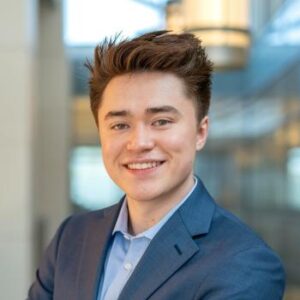 Dr. Brendan Ball is a Postdoctoral Scholar in the Stanford University Department of Pathology, and his research involves systems biology and computational approaches to understand how cancer cells spread to other parts of the body. Prior to Stanford, Brendan pursued undergraduate studies in Chemical Engineering and his PhD in Biomedical Engineering. As a Grant Coach, Brendan is dedicated to supporting individuals achieve their writing and professional goals and has helped others prepare successful fellowship applications to the NSF, NIH, and external foundations. Outside of research, you will often find him playing soccer, hiking, or trying out the best food spots in town.
 Dr. Chelse Spinner is a Postdoctoral Fellow in the lab of Dr. Suzan Carmichael (Department of Pediatrics, School of Medicine), with the Stanford Center for Promoting Improvement in Hemorrhage-related Severe Maternal Morbidity (PRIHSM). Her research utilizes quantitative and qualitative methods to understand drivers of hemorrhage, as well as explore social and structural factors that impact maternal health and well-being. She is passionate about addressing health disparities primarily impacting diverse communities. She is a 2025 recipient of the NIH/NICHD Loan Repayment Program (LRP) in Health Disparities Research award. As a Grant Coach, Chelse will be co-teaching the Grant Writing Academy’s Seminar Series by demystifying the grant writing process, sharing expertise, and fostering an inclusive and supportive writing community. She is excited to contribute as an active member of the grant writing community by providing meaningful feedback to graduate students and other postdoctoral fellows. In her free time, she enjoys socializing with family and friends, reading, listening to music, and watching movies.
Questions?
For more information, please contact Crystal Botham, PhD.