Online Proposal Bootcamp (BIOS 425)
- Clinical Fellows
- Graduate Students
- Instructors
- Medical Students
- Postdocs
Registration is closed. This Bootcamp will be offered next in Spring 2027. Add your name to our interested list and we will email you when registration is available again.
Why Join our Proposal Bootcamp?
Prior Proposal Bootcamp participants had almost double the proposal success rates as non-Bootcamp trainees!
Check out our published outcomes in PLOS ONE.
This 9-week bootcamp includes:
- Overview of grant writing fundamentals for fellowships & career development awards
- Tips & resources for writing compelling grants delivered through text & videos
- Peer review for feedback and opportunities to “think like a reviewer” on Thursdays, September 24 – November 19, 2026 9-10:30AM
- Grant writing tips delivered directly to your in-box each week
Who this is for:
- Graduate Students
- Postdocs
- Instructors
- Clinical Fellows / Scholars
- All participants must committed to attending weekly Zoom meetings on Thursdays, September 24 – November 19, 2026 at 9-10:30AM.
This Bootcamp is only available to Stanford affiliates at this time.
Graduate & Medical Students:
Please register using the link above and then we will email you a permission code to register for BIOS 425 in Axess. The course is credit / no credit. A satisfactory grade for BIOS 425 registered students requires: completing the modules in Canvas and participating in the weekly meetings with a Grant Coach.
Our bootcamp goal:
The goal of the course is to conceive, write, and revise a proposal, with the ultimate goal of submitting it. Towards that end, ancillary goals are:
- Understand the role each document has in a proposal.
- Draft and revise each document, with a focus on Specific Aims, Research Plan, and Training Plan documents.
- Learn to give and receive critical feedback on scientific writing.
- Understand how reviewers and the review process evaluate your application.
- Enhance writing clarity and simplicity to improve scientific writing, and establish a writing practice.
This Bootcamp is for you, if you can:
- Attend weekly 1.5 hour meetings (Thursdays, September 24 – November 19, 2026 9-10:30AM) with a Grant Coach and actively participate in peer review. All meetings are over zoom.
- Commit to a writing schedule during the entire course
- Set aside 1-2 hours per week to review materials on course website (Canvas) which are organized as weekly modules.
- Build 2-3 writing blocks into your weekly schedule of at least 2-hours to draft proposal documents.
Bootcamp Structure:
Each session (Thursdays, September 24 – November 19, 2026 9-10:30AM) will begin with a mini-lecture addressing the writing goals for that week. Then we will peer-review parts of your proposal, focusing on one document per week. You will give and receive feedback from peers in class. The Online Proposal Bootcamp uses the NIH NRSA Fellowship (F30, F31, F32) and NIH K Awards as examples.
Attendance and Preparation:
Weekly attendance and participation is important! Each week you will complete guided exercises relevant to specific parts of your proposal application. In class you will receive feedback that will improve the clarity of your writing and deepen your thinking. Your peers also depend on you to provide feedback on their writing and our previous participants found that providing feedback helped improve their own writing as well. If you must miss your weekly session (Thursdays, September 24 – November 19, 2026 9-10:30AM), please email your Grant Coach. You must attend 7 weekly meetings for a Satisfactory grade.
Comments from our participants:
“The deadlines forced me to think about my drafts and writing a compelling grant in a timely manner. Otherwise, I would have crammed it into 2-3 weeks before the deadline.”
“The peer review process helped me see my proposal through the eyes of a critical reviewer”
“It improved my writing skills”
“I really appreciated the grant coach office hours”
“Meeting up with other people that were ‘in the same boat’ as me was helpful”
Helpful resources:
Our resources use NIH Fellowships (F99/K00, F30, F31, F32, etc.) and Career Development Awards (K99/R00, K08, K23, K01, K22, K25, etc.) as examples.
- The K Award Guidebook: Your Guide to Launching an Independent Research Career (Available at Lane Medical Library)
- Writing a Ruth L. Kirschstein NRSA Fellowship (F30, F31, F21)
- Finding Funding
- Eight tips for Planning Your Proposal
- Science & Art of Grant Writing Symposium
- Timing your Proposal – Department of Pediatrics resource
- Tools & Templates – RMG’s proposal checklists and templates
Offered Next:
This Bootcamp is offered in the Autumn and Spring quarters. This bootcamp will be offered next in Spring 2027.
Other relevant Proposal Bootcamps:
Grant Coach:
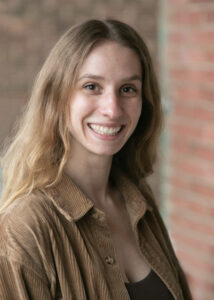 Dr. Kate MacDonald is a cell biologist and children’s author, conducting her postdoctoral research fellowship in the Cimprich lab at Stanford. She holds a PhD in Medical Biophysics from the University of Toronto and a BS in Cell Biology from the University of British Columbia, where she was an undergraduate peer mentor for second- and third-year biology students. She is the author of science books for curious kids, including fiction (Izzy Steam, Bookpress, 2026) and non-fiction (Why Trust a Scientist?, Orca Book Publishers, 2026). Kate is the founder of Zoom a Grad Student, a virtual outreach program that connects high schoolers with life science graduate students, to learn about science careers and how to navigate life as a young adult. You can find her on TikTok sharing her life as a scientist and writer as @katemacdonaldphd.
Questions?
For more information, please contact Crystal Botham, PhD.